How to Play Pickleball
Pickleball is played on a court 13.41m long and 6.10m wide, with a solid paddle and a perforated plastic ball. The serve is hit underhand, diagonally, from behind the baseline. That serve must bounce before the receiving side returns it, and the return must bounce again before the serving side may strike it. After those two bounces, either side may volley. Only the serving side scores, and games run to 11 points, won by two.
That is the sport in a paragraph. The rest of this guide fills in what a first-time player in the Klang Valley actually needs: the court, the gear, the serve, the kitchen, the score, and a plan for the first hour.
The Court
A pickleball court has the same footprint as a doubles badminton court, which is why the sport moves so easily into Malaysian sports halls. Singles and doubles use identical dimensions - nothing shrinks or widens when a player leaves.
| Element | Measurement |
|---|---|
| Court length | 13.41m (44 ft) |
| Court width | 6.10m (20 ft) |
| Net height at the posts | 0.91m (36 in) |
| Net height at the centre | 0.86m (34 in) |
| Non-volley zone depth | 2.13m (7 ft) from the net, each side |
| Service courts | Two per side, divided by the centreline |
The non-volley zone - universally called the kitchen - is the painted strip either side of the net. It governs more beginner faults than any other marking on the court.
What You Need
- A paddle. Solid face, no strings. An entry-level composite paddle is fine for a first season. Weight and balance matter more than price.
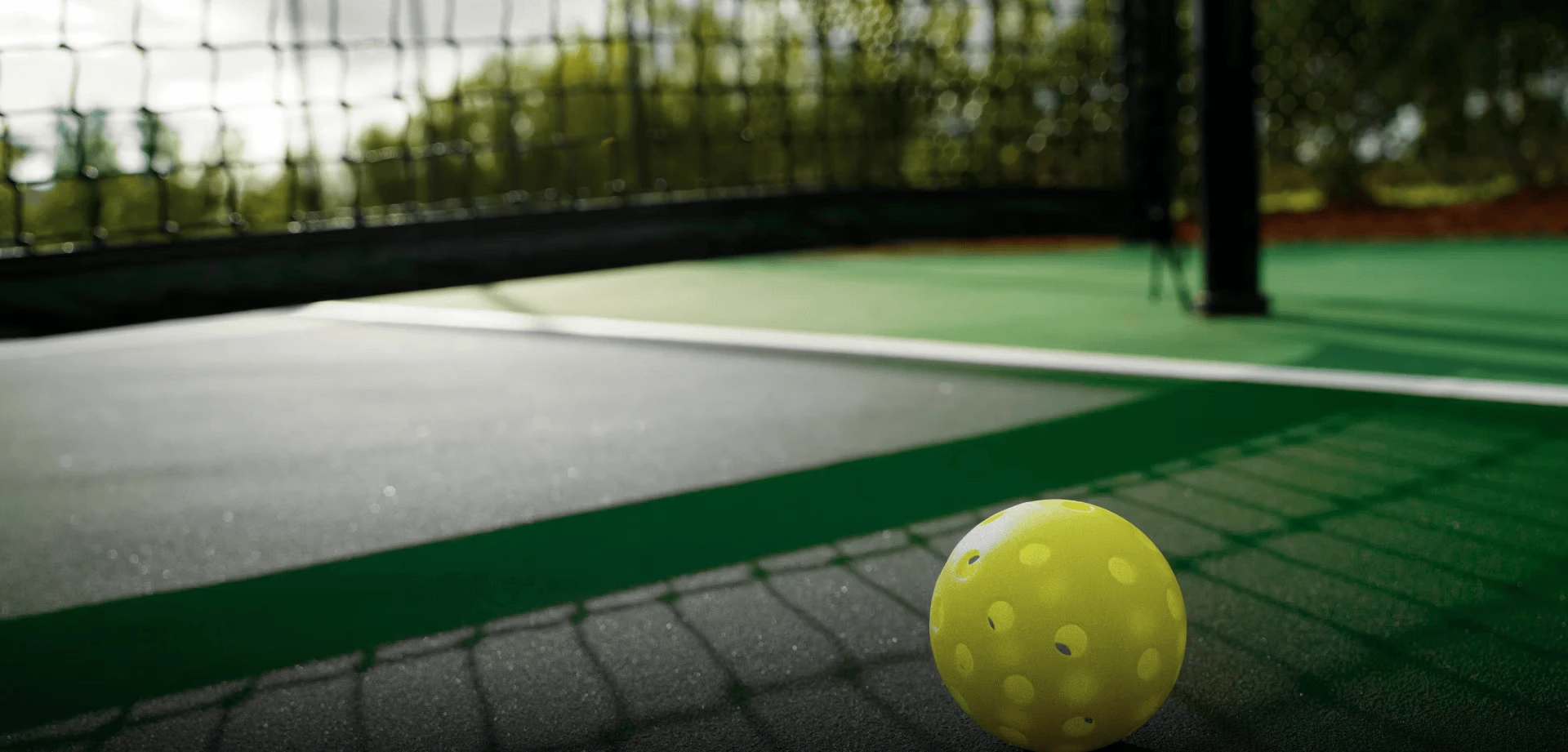
- A ball. Perforated plastic. Indoor balls have fewer, larger holes and a softer flight; outdoor balls are harder, with smaller holes, to hold their line in wind.
- Court shoes. Non-marking soles with lateral support. Running shoes roll at the ankle under the side-to-side movement this sport demands.
- Water and a towel. Not optional in this climate.
Most Klang Valley venues rent paddles and supply balls, so a first session costs nothing beyond the court fee. Buy gear once the sport has earned a place in the calendar.
The Serve
Every point begins with a serve, and the serve is the most rule-bound shot in pickleball.
- Stand behind the baseline. At least one foot must be behind it at contact, and neither foot may touch the court or stray outside the imaginary extensions of the sideline and centreline.
- Hit underhand in an upward arc. Contact is made below waist level, and the highest part of the paddle head stays below the highest part of the wrist.
- Serve diagonally. The ball must land in the service court diagonally opposite.
- Clear the kitchen. A serve landing in the non-volley zone, or on its line, is a fault. Every other line counts as in.
- One attempt only. There is no second serve.
A drop serve is also permitted: release the ball from the hand and strike it after the bounce. The ball may not be thrown upward. The below-waist and paddle-height requirements do not apply to a drop serve, which makes it the easier starting point for most beginners.
Most rulebooks in use today have removed the service let, so a serve that clips the net and lands in the correct service court stays live. Play it.
The Two-Bounce Rule
This is the rule that separates pickleball from every other racquet sport, and the one new players break within their first ten minutes.
- The serve must bounce before the receiving side returns it.
- The return must bounce before the serving side plays it.
- After those two bounces, either side may volley - strike the ball out of the air - for the remainder of the rally.
The rule exists to stop the serving side rushing the net behind a serve. It hands the returning side a genuine advantage, and it is why rallies last longer than most beginners expect.
The Kitchen
A player may not volley while standing in the non-volley zone or touching its line. The line is part of the zone.
Two details catch beginners:
- Momentum counts. If a volley is struck and the player's momentum then carries them into the kitchen, it is a fault - even if the ball is already dead.
- Entering is legal. A player may step into the kitchen at any time to play a ball that has bounced. The zone restricts volleys, not feet.
Both feet must be re-established outside the zone before volleying again. Every edge case is covered in the kitchen rules guide.
Keeping Score
Traditional pickleball uses side-out scoring: only the serving side can add a point. Games are played to 11 and must be won by two.
In doubles the score is called as three numbers before every serve - the serving side's score, the receiving side's score, then 1 or 2 for which partner is serving. "Four, two, one" means the serving side has four, the receiving side has two, and the first server is on the ball.
Server position follows the score. Serve from the right-hand court when the serving side's score is even, from the left when it is odd. Partners swap positions after each point they win, so the correct server always ends up in the correct court. Rally scoring, and how it differs, is covered in the scoring guide.
Your First Hour
- Warm up with soft dinks over the net from mid-court. Feel the ball before chasing it.
- Hit ten drop serves in a row into the correct diagonal box.
- Play out points under the two-bounce rule until it no longer requires thought.
- Stand a step behind the kitchen line and rally from there. That is where points are won.
- Call the score aloud before every serve. It builds the habit that keeps social games honest.
An hour is enough to sustain a rally. A month of weekly play is enough to enjoy competitive doubles.
Playing in Malaysian Conditions
Heat and humidity shape the sport here more than any rule does.
- Play covered, or play late. Sheltered and air-conditioned courts remove the two variables that ruin an outdoor session: afternoon sun and sudden rain.
- Carry a spare grip. Sweat ends grip security long before wear does.
- Hydrate before and between games. Rallies are short and the breaks are shorter.
- Reserve the evening slots early. Weeknight play between 7pm and 10pm is the busiest window across Shah Alam and Petaling Jaya.
The club's courts run daily from 10:00 to midnight, which leaves a long, cool window for play after work.
Court Etiquette
- Call the score before serving, loudly enough for all four players to hear.
- Call the lines on your own side. Any doubt goes to the opponent.
- Call "ball on" if a stray ball rolls onto the court, and stop the point.
- Tap paddles at the net at the end of the game. It is the sport's handshake.
Where to Play
De Palma Social Club is a padel and pickleball members' club with three locations in the Klang Valley. The flagship at i-City Central Mall, Shah Alam holds two glass-walled padel courts and is taking reservations now. Pickleball arrives with the Kelana Jaya and Paradigm Mall PJ venues, both laid out with regulation pickleball lines. Each site is listed on the locations page, and more beginner reading sits in the resources library.
FAQ
How do you play pickleball for the first time?
Borrow or rent a paddle, learn the drop serve, and play doubles. Serve underhand and diagonally, let the serve and the return each bounce once, then rally. Only the serving side scores, and the game goes to 11 points, win by two.
Is pickleball easy to learn?
Yes. Most beginners sustain a rally within their first session because the court is small, the ball is slow and the serve is underhand. Competence comes quickly; mastering the soft game at the net takes considerably longer.
What is the two-bounce rule in pickleball?
The serve must bounce before it is returned, and the return must bounce before the serving side hits it. Once both bounces have happened, either side may volley for the rest of the rally.
Can you volley in pickleball?
Yes, after the two-bounce rule has been satisfied. You may not volley while standing inside the non-volley zone or touching its line, and you may not be carried into that zone by your own momentum after volleying.
Do I need my own paddle to start?
No. Most Klang Valley venues rent paddles and provide balls. Court shoes with non-marking soles are the one item worth bringing yourself.
Where can I play pickleball in the Klang Valley?
Courts are spread across Shah Alam, Petaling Jaya and Kuala Lumpur, in sports halls, malls and community centres. De Palma Social Club brings regulation pickleball to its Kelana Jaya and Paradigm Mall PJ venues, alongside padel at i-City Central Mall, Shah Alam.